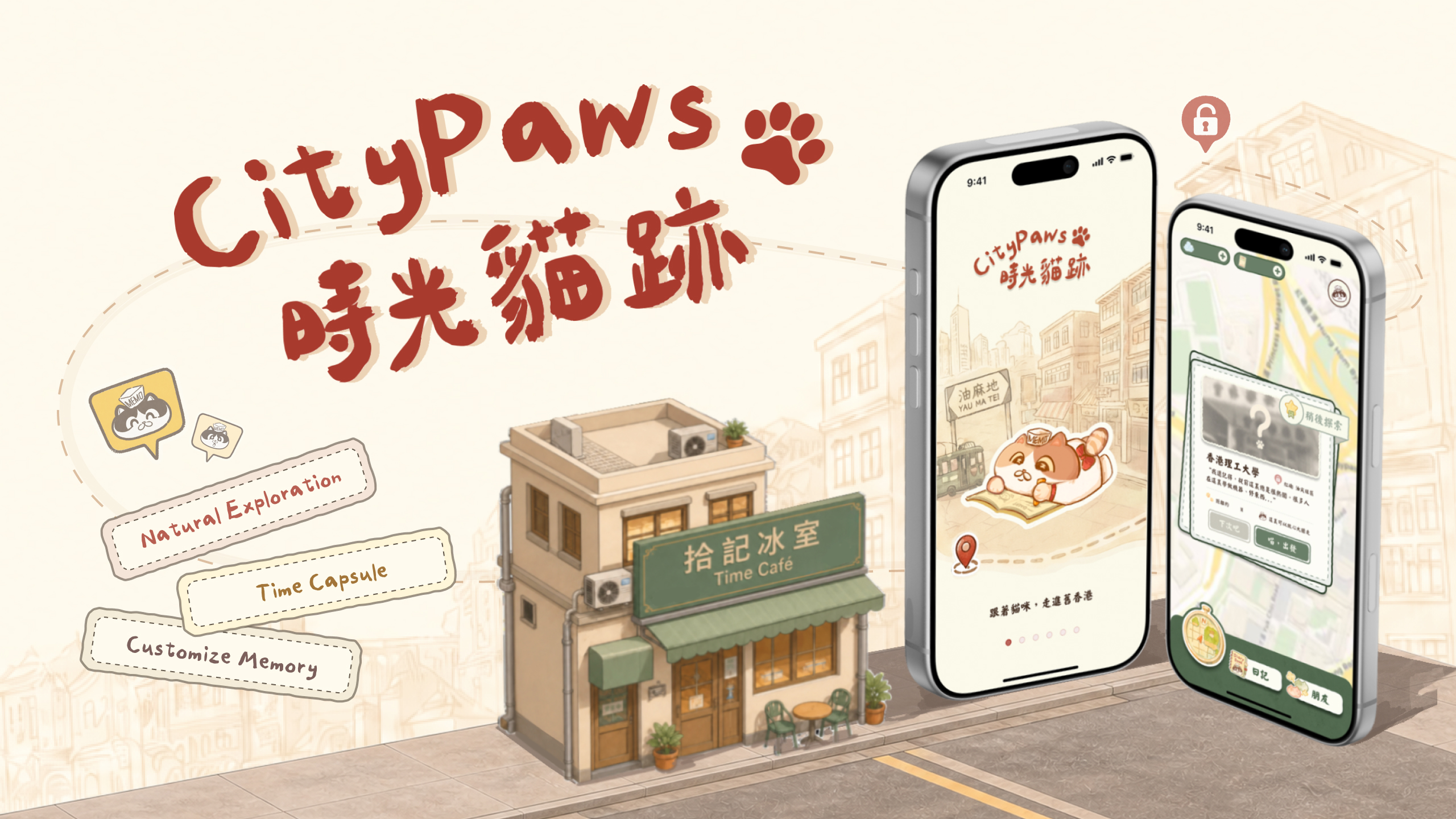
Entrepreneur project · Citywalk App
Overview
CityPaws is a lightweight interactive collection app combining Citywalk with fragmented storytelling, dedicated to exploring, documenting, and revitalizing fading cultural memories.
Setting our MVP in Hong Kong, users follow a cat named "Lucky Boss" with a natural walking mode — no fixed routes or mandatory checkpoints; check-ins trigger only near an anchor. When checking in (taking photos, leaving messages), Lucky Boss randomly performs different actions or animations, so each encounter is unique. During exploration, users learn local old Hong Kong stories, read others' messages, and randomly receive food collectibles (e.g., red bean ice, pineapple bun), each with its own story, saved to their "Bing Sutt Collection". Users can also collect Lucky's costumes via a gashapon machine and style it freely, DIY their Citywalk diary and share it with friends, team up for exploration, or showcase their collection. Through "walk, snap, collect", users create their own HK memories.
Urban modernization often obscures local heritage and cultural history, leaving younger generations and travelers disconnected from a city's fading memories and traditions, while traditional tourism or educational apps rely on rigid, unengaging routes.
CityPaws bridges urban exploration and heritage preservation through a lightweight, gamified app centered in Hong Kong. By following an interactive cat mascot ("Lucky Boss") in an open, route-free walking mode, users discover local history as they explore, trigger location-based check-ins, unlock nostalgic food collectibles for their digital "Bing Sutt Collection," and curate personal citywalk diaries, transforming cultural discovery into a fun, social, and flexible narrative journey.
Figma, C# Scripting, Location POI Triggers, Generative AI (Claude Code, Lovable, ComfyUI), Hand Sketches, On-field Research, User Questionnaires & Interviews, Interactive UI/UX Design, Fragmented Storytelling, Gamification Mechanics.
The Problem
138 Declared Monuments, 1,000+ Graded Historic Buildings, 24 Revitalised Heritage Sites. Hong Kong has established a comprehensive heritage conservation system, preserving historic buildings while transforming them into active cultural spaces.
130+ years of urban memory: ice room culture, pawnshop culture, old coastline, neighbourhood stories.
21B+ #Citywalk views, 370K+ related posts, 54.4% of travel planning happens via social platforms. Young travellers increasingly seek authentic local experiences beyond traditional sightseeing.
Source: Antiquities and Monuments Office (AMO), Antiquities Advisory Board (AAB), Development Bureau HKSAR, 2026.
Field Research
On-site research across Hong Kong highlighted four recurring cultural touchpoints: the coastline history (public information limited to bulletin boards), footbridges (mixing modern commercial and historical styles), hidden local shops (food, stamp and record shops in small alleys) and the city's iconic light boards, sadly disappearing as the city develops. Footbridges, light signs, and local shops proved particularly captivating and worth careful exploration.
Citywalk Interviews
What we discovered. Almost everyone records their city walks — mostly photos, then social sharing and journaling — but those records stay scattered across albums, chats and social media, never forming an integrated city memory. People don't want to be guided: the fun is in randomness and unexpected encounters, strolling at leisure with the phone kept at low frequency. And what actually sticks isn't the location itself but its story — historical and cultural details, lighting and vibes, random findings.
"People do not remember routes. They remember stories, emotions, and unexpected discoveries."
Key InsightThematic Coding
83% (10/12) of users actively record their city walks (photo-taking 12, social sharing 8, journaling 4), yet these records are scattered across albums, moments and social media, barely forming any integrated city memory.
Top related codes: randomness and a preference for unexpected encounters (10), strolling at leisure and exploring at random (7), reliance on low-frequency mobile phone use (8).
Top memory triggers: historical culture observation, lighting and vibes, random findings, gap between online expectation and reality.
The Solution
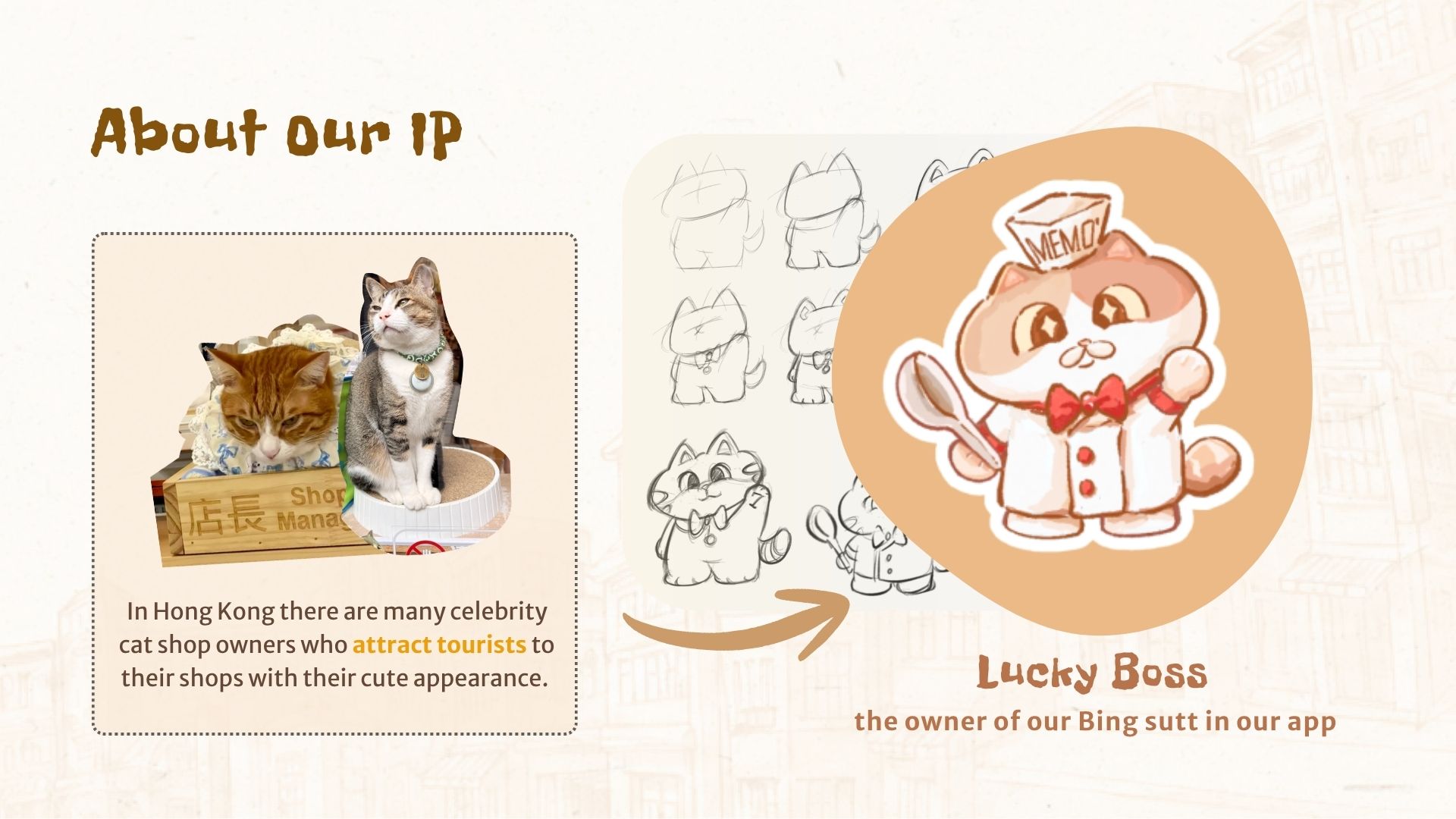
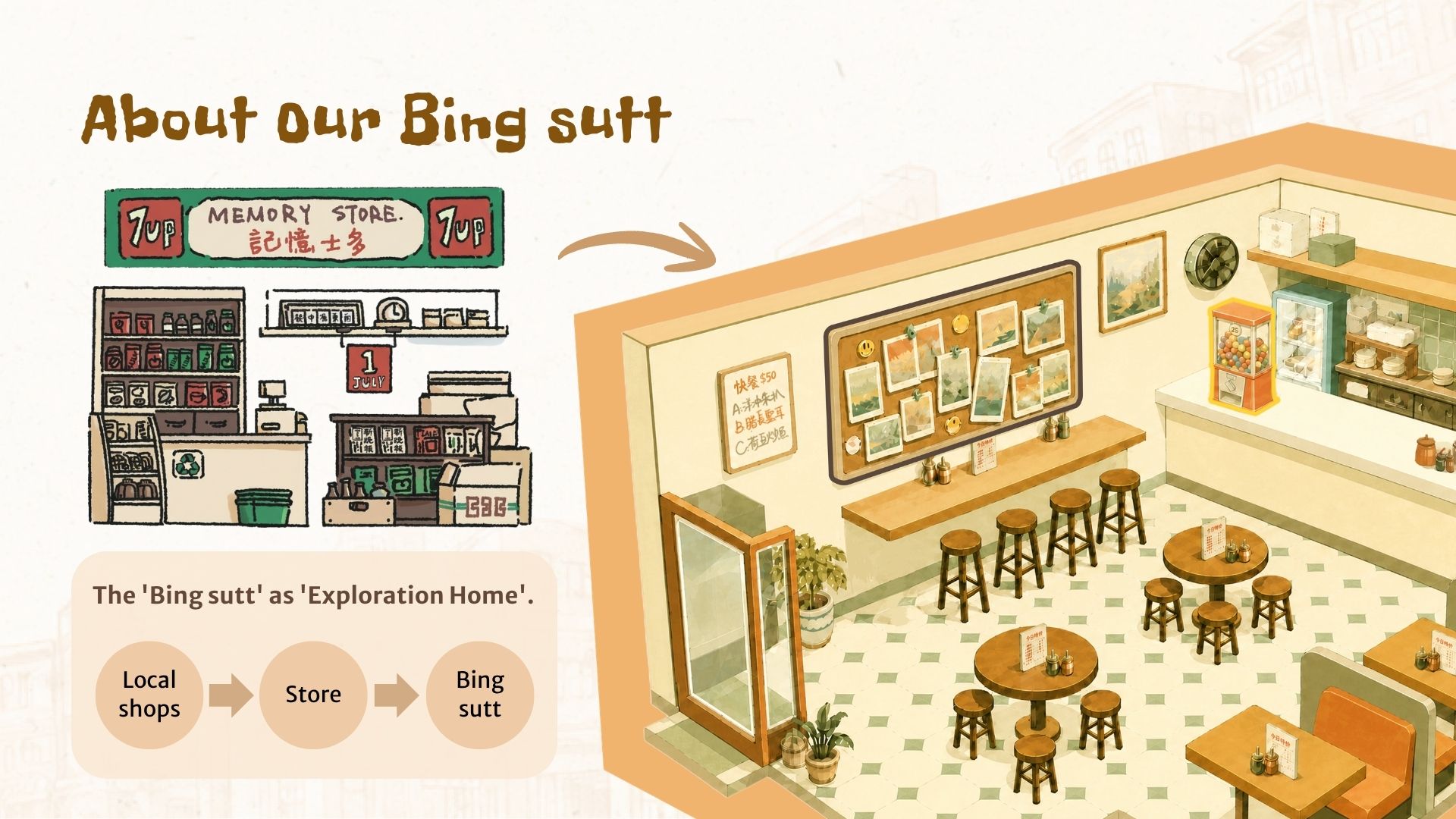
In Hong Kong there are many celebrity cat shop owners who attract tourists to their shops with their cute appearance. Lucky Boss, the owner of our Bing sutt, is the IP guiding the whole experience. The 'Bing sutt' (Hong Kong ice room) acts as the user's 'Exploration Home'.
Application Architecture
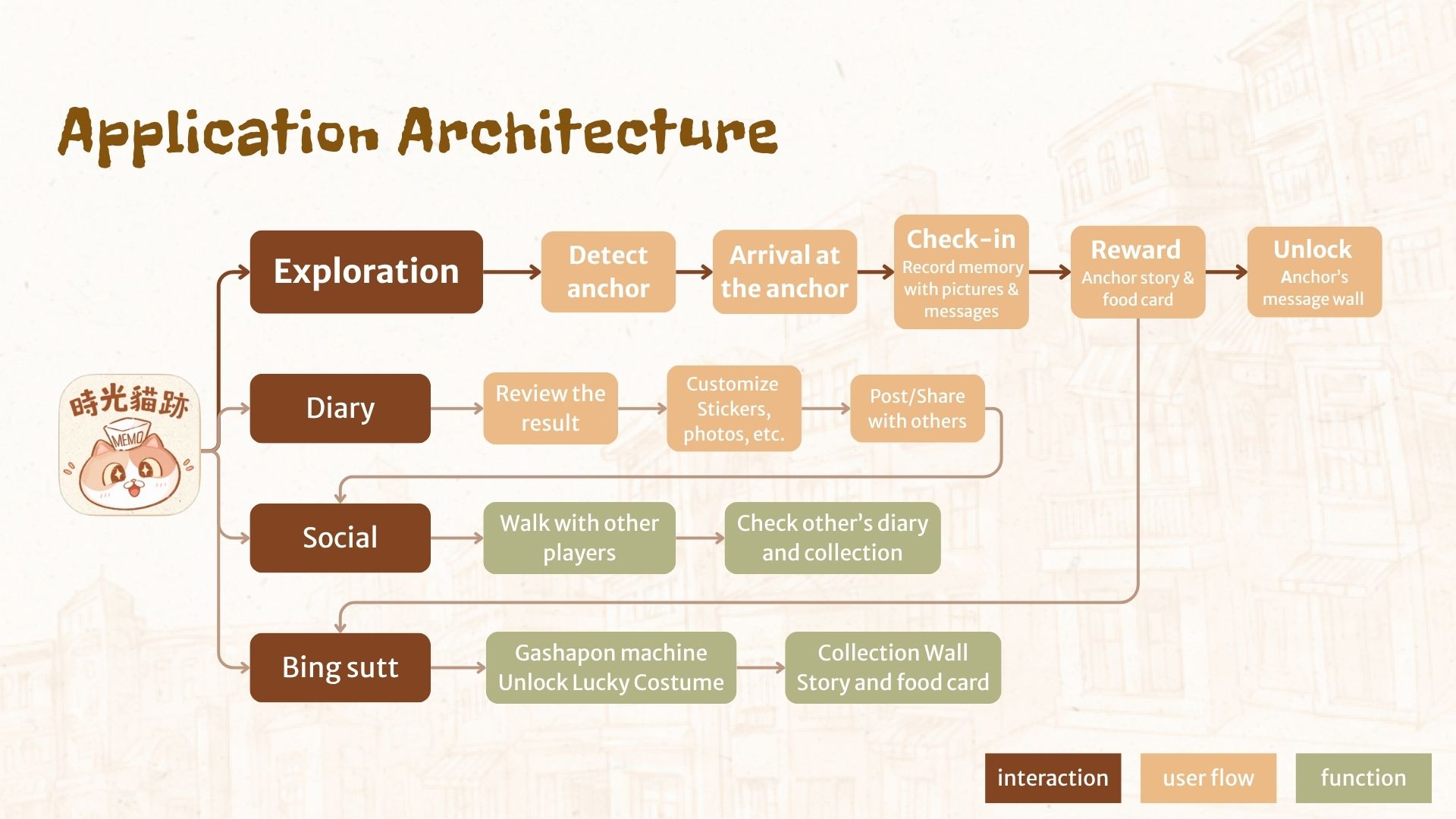
Four connected areas — Exploration, Diary, Social and Bing sutt — organized by interaction, user flow and function.
Core Experience
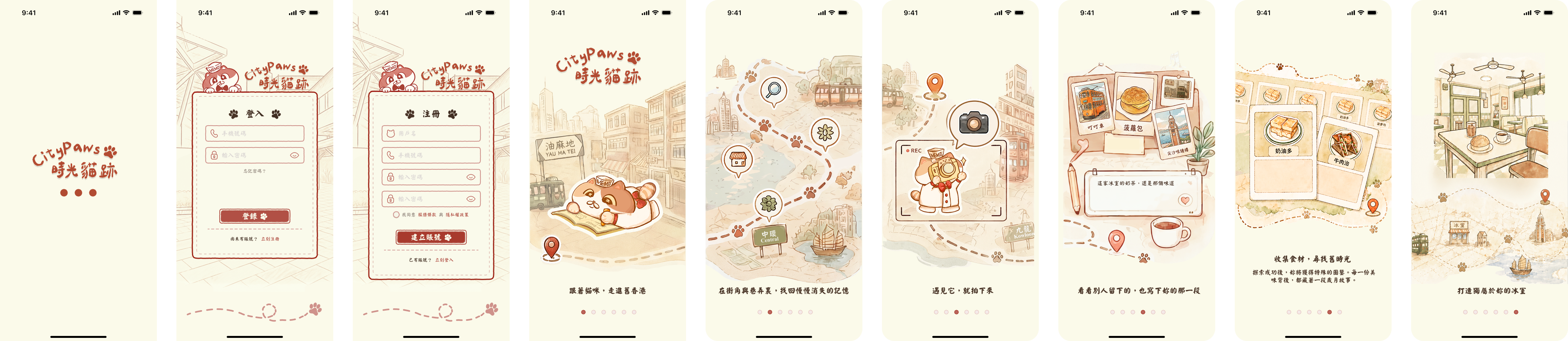
Onboarding & sign-in — meeting Lucky and the Time Café.
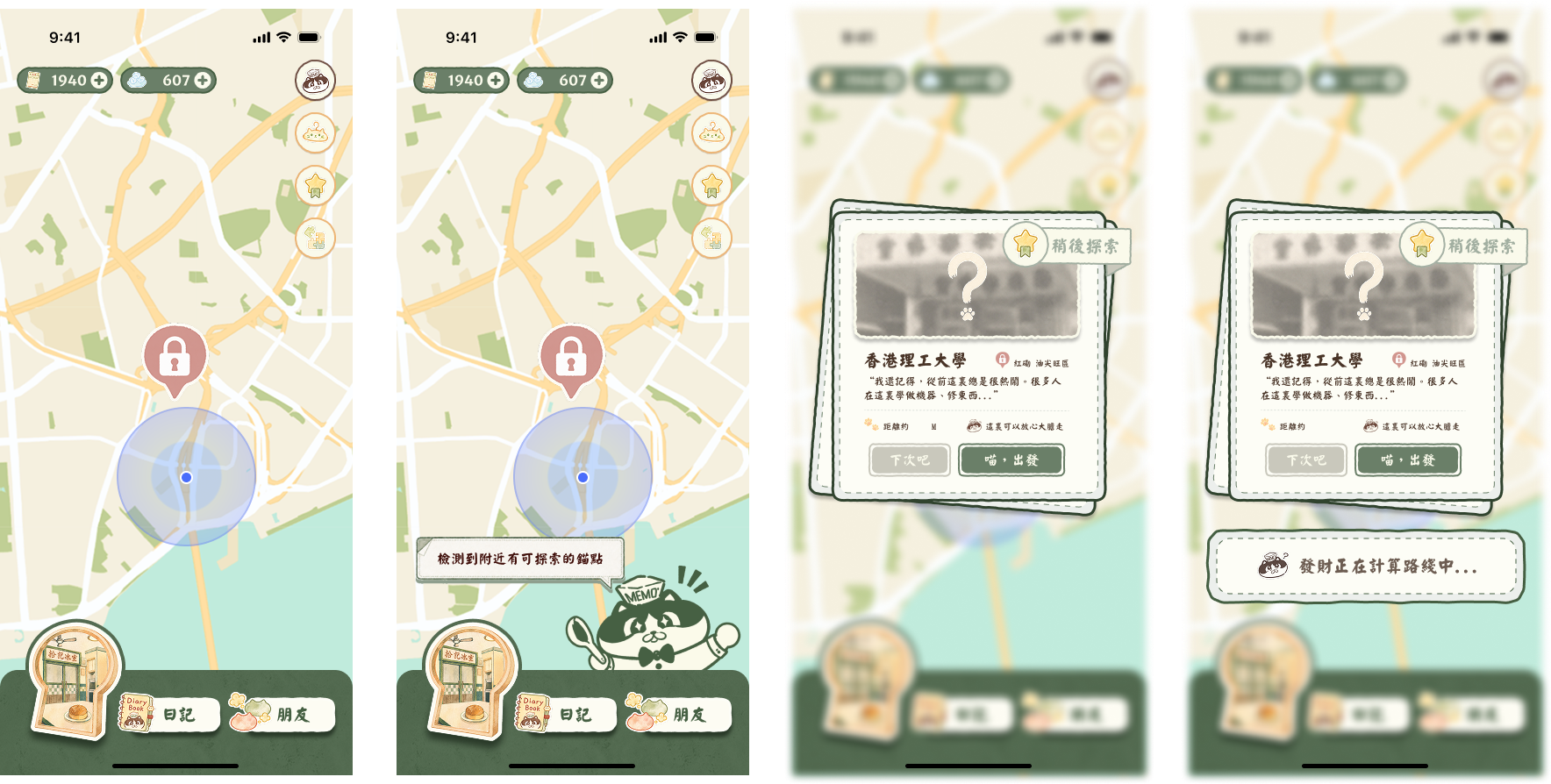
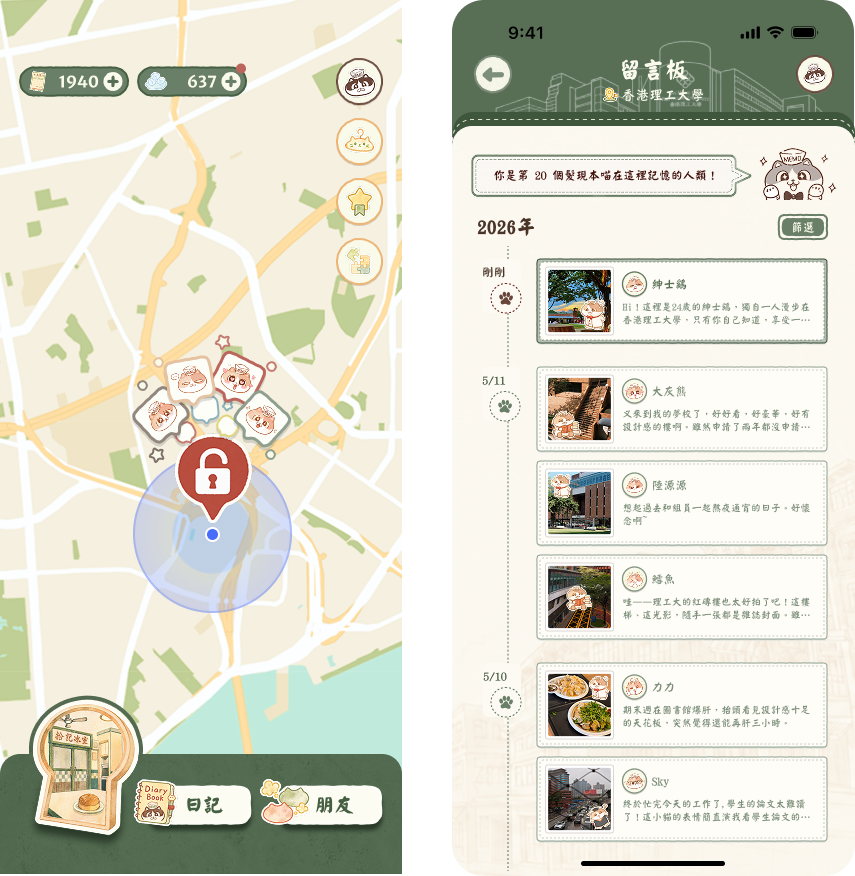
As the user explores the city, he'll receive notifications whenever getting close to a Point of Interest that matches his interests.
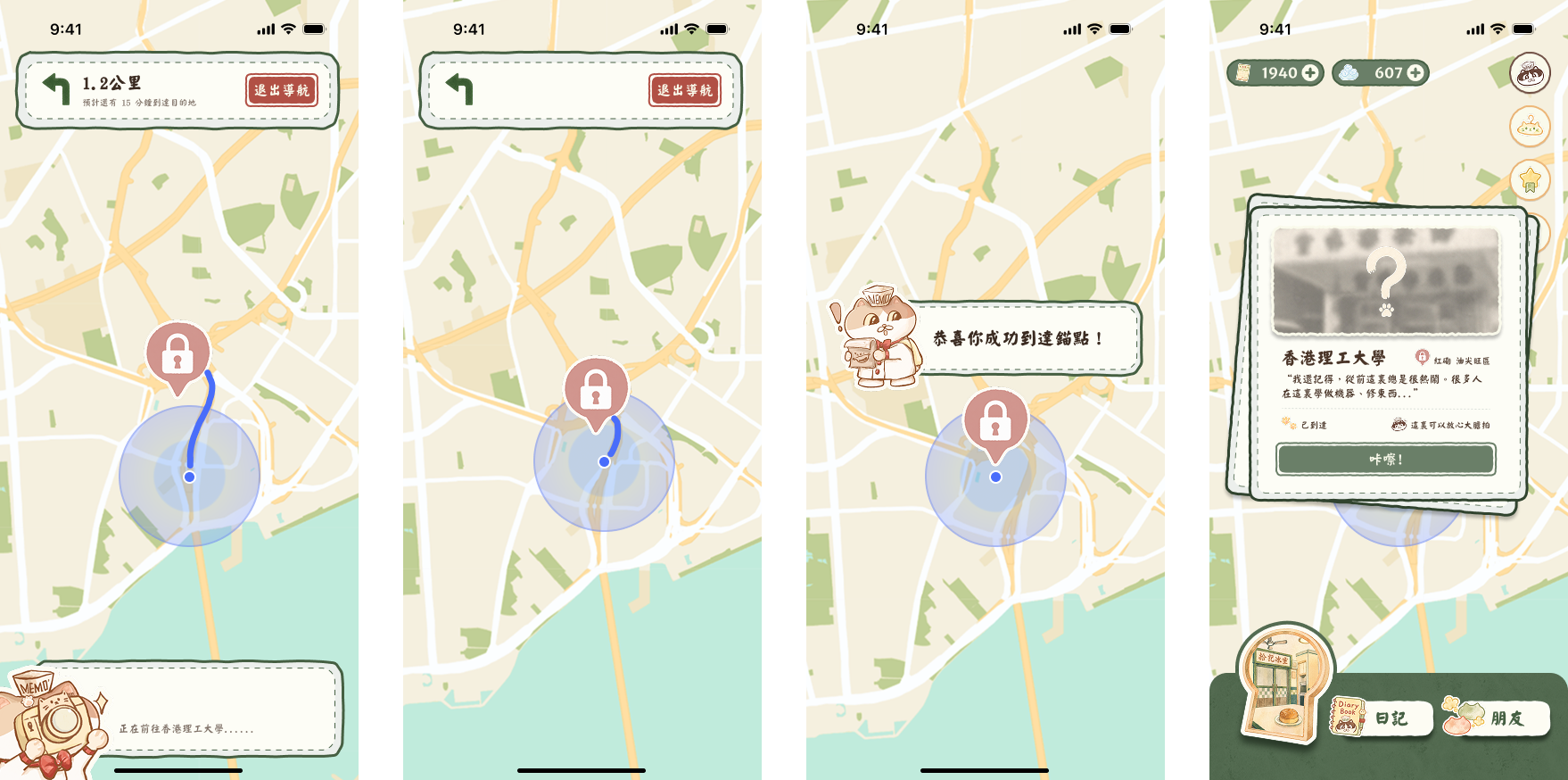
If the player decides to reach the POI, the navigation function will be initialized, guiding the user to the exact location.
Upon entering the POI's arrival radius, the player can interact with the trigger point: take a picture and leave a note. Each landmark randomly gives you one of three actions.
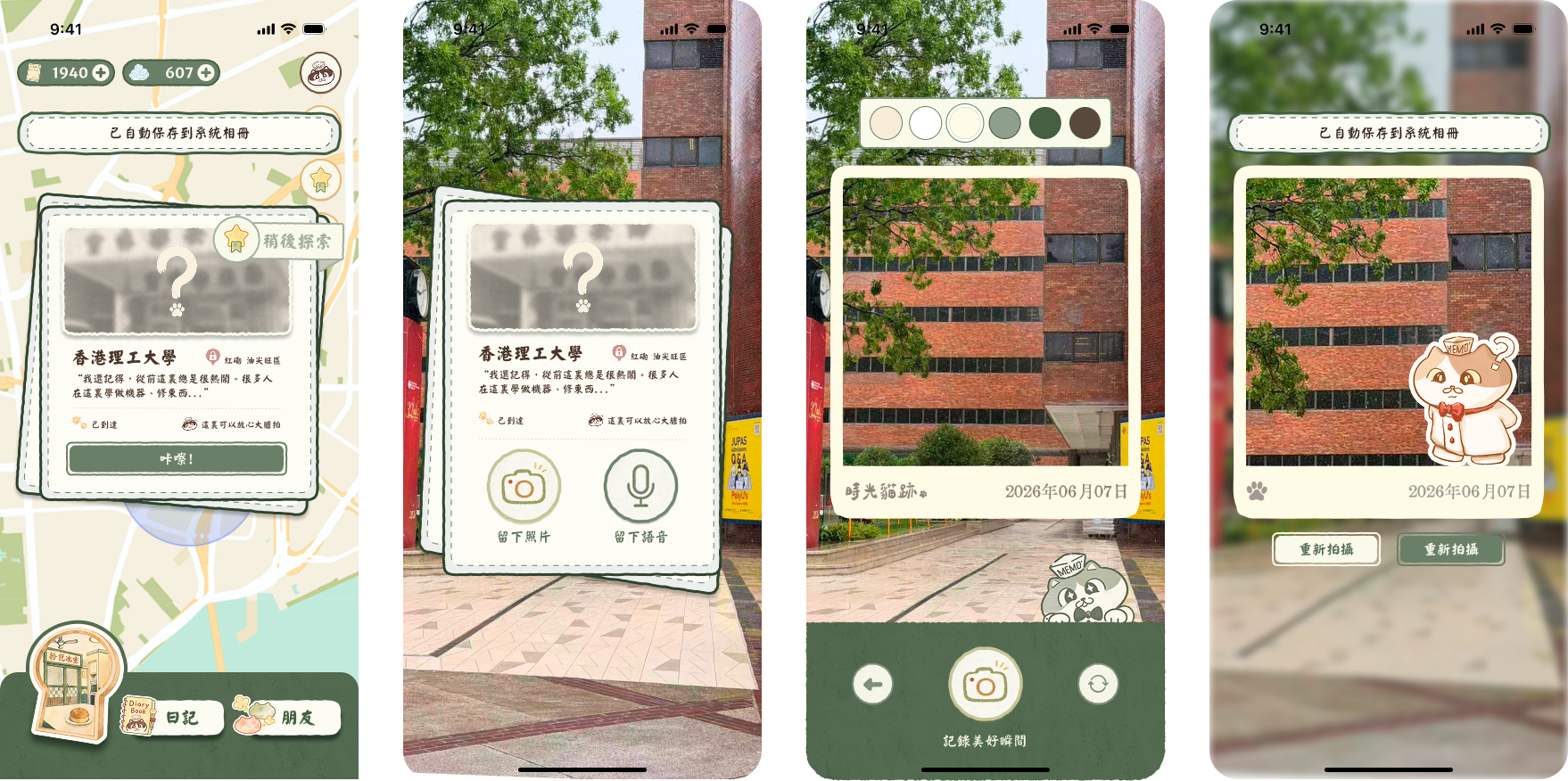
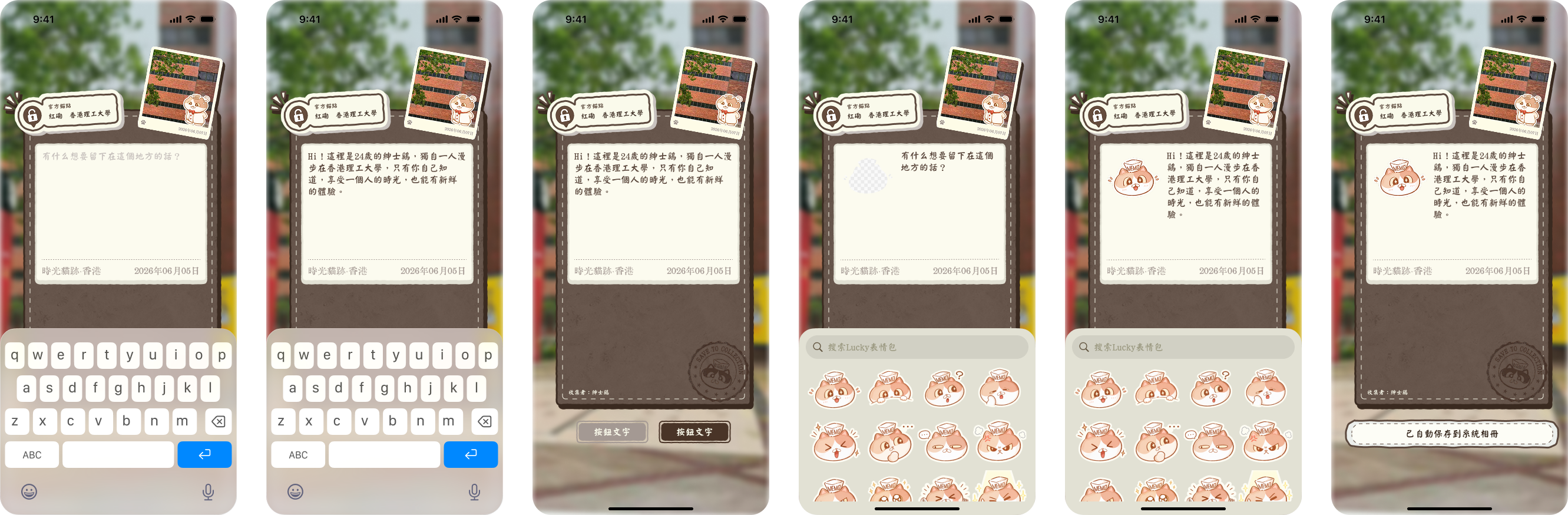
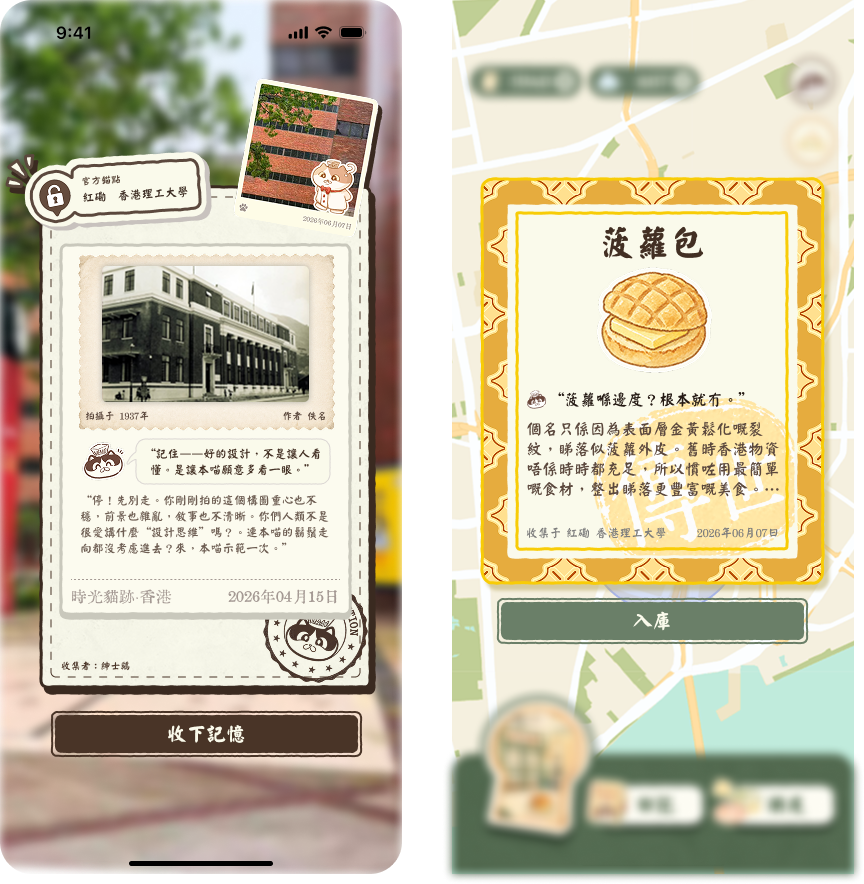
Once you finish interacting, the user will unlock two rewards: a location-specific story featuring our IP Lucky Boss, and a tasty piece of trivia about Hong Kong local food. Upon completing the collection phase, the POI unlocks, granting the player access to photos and notes previously left by other users.
Diary Area
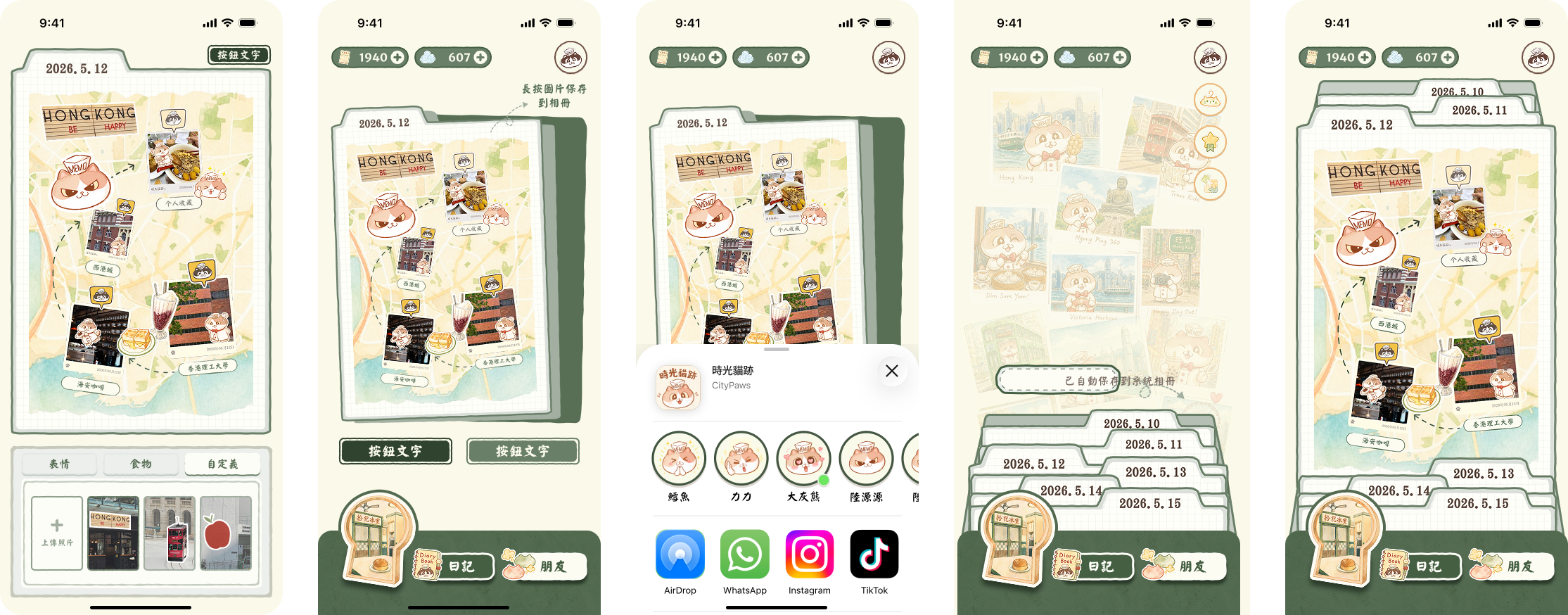
At the end of each walk, the app automatically generates a daily recap of the citywalk, already decorated with default stickers.
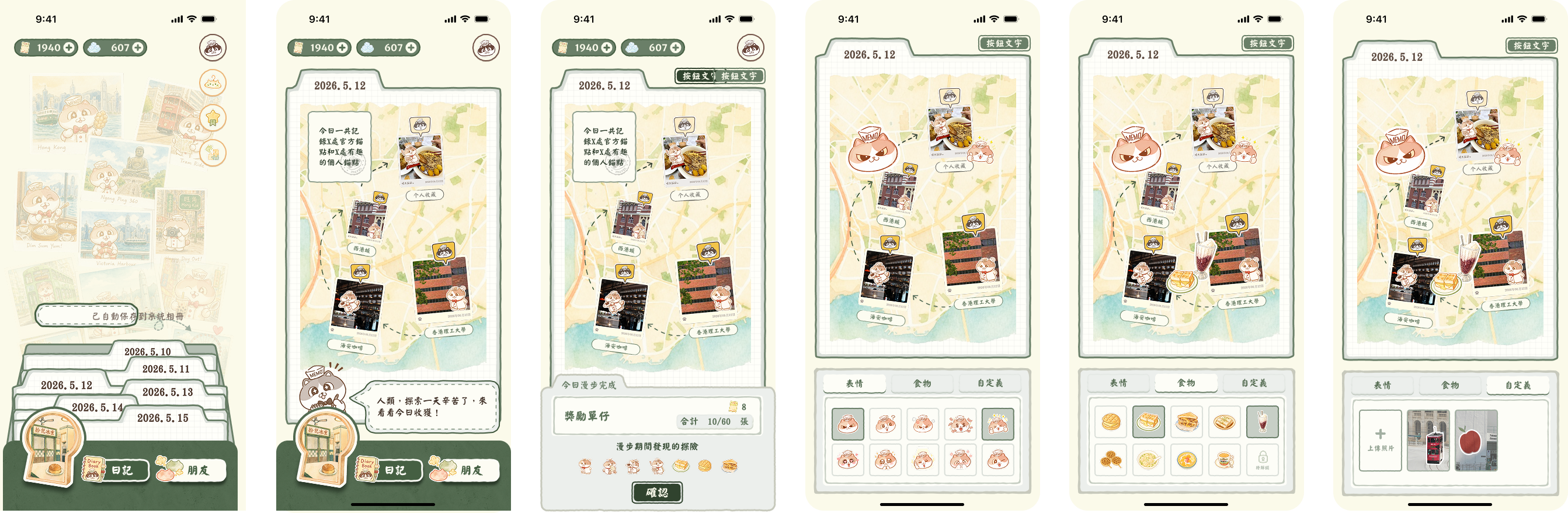
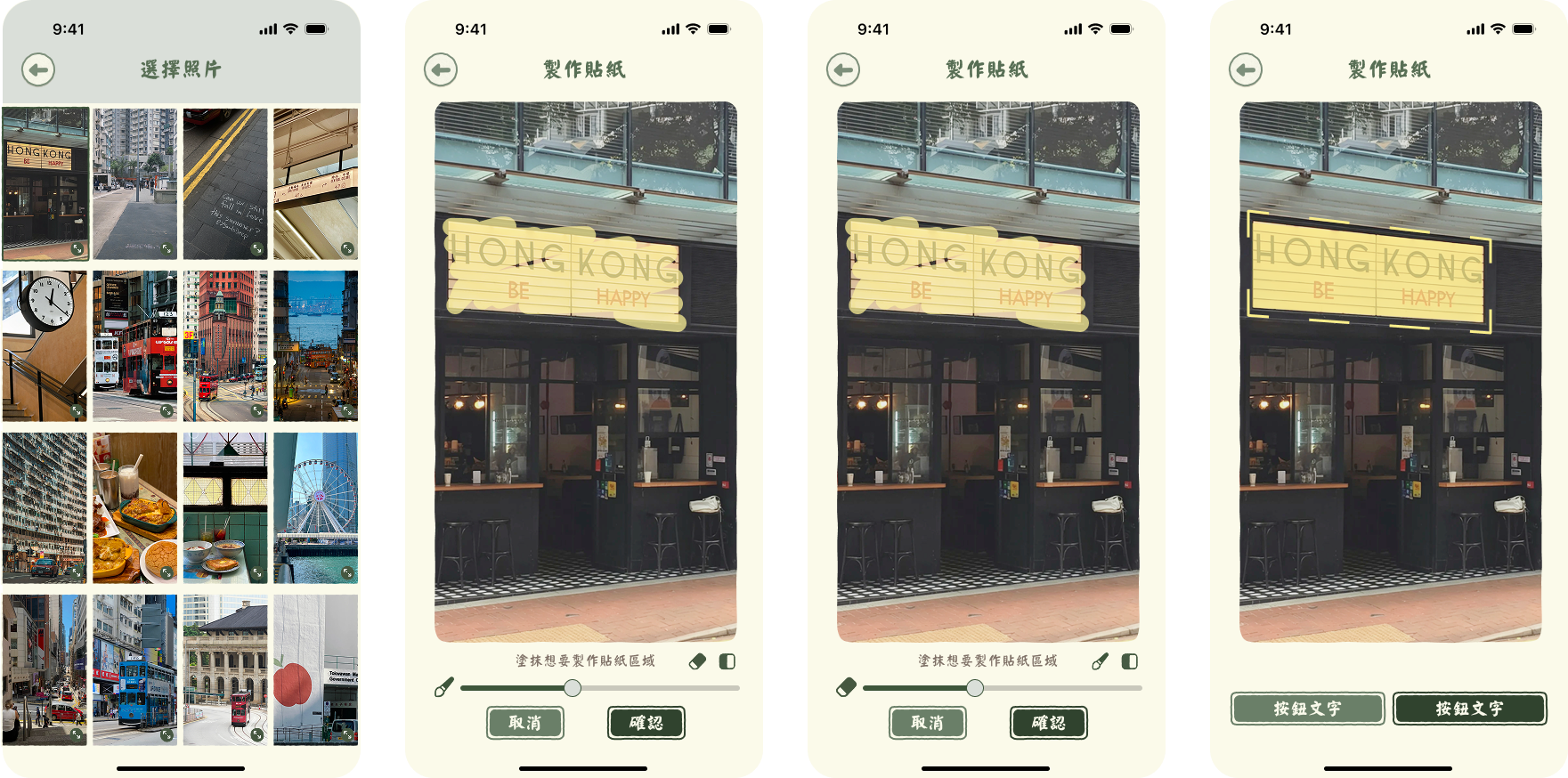
Users can personalize the recap by creating their own stickers from their photos.
The finished diary page can be shared to any social platform.
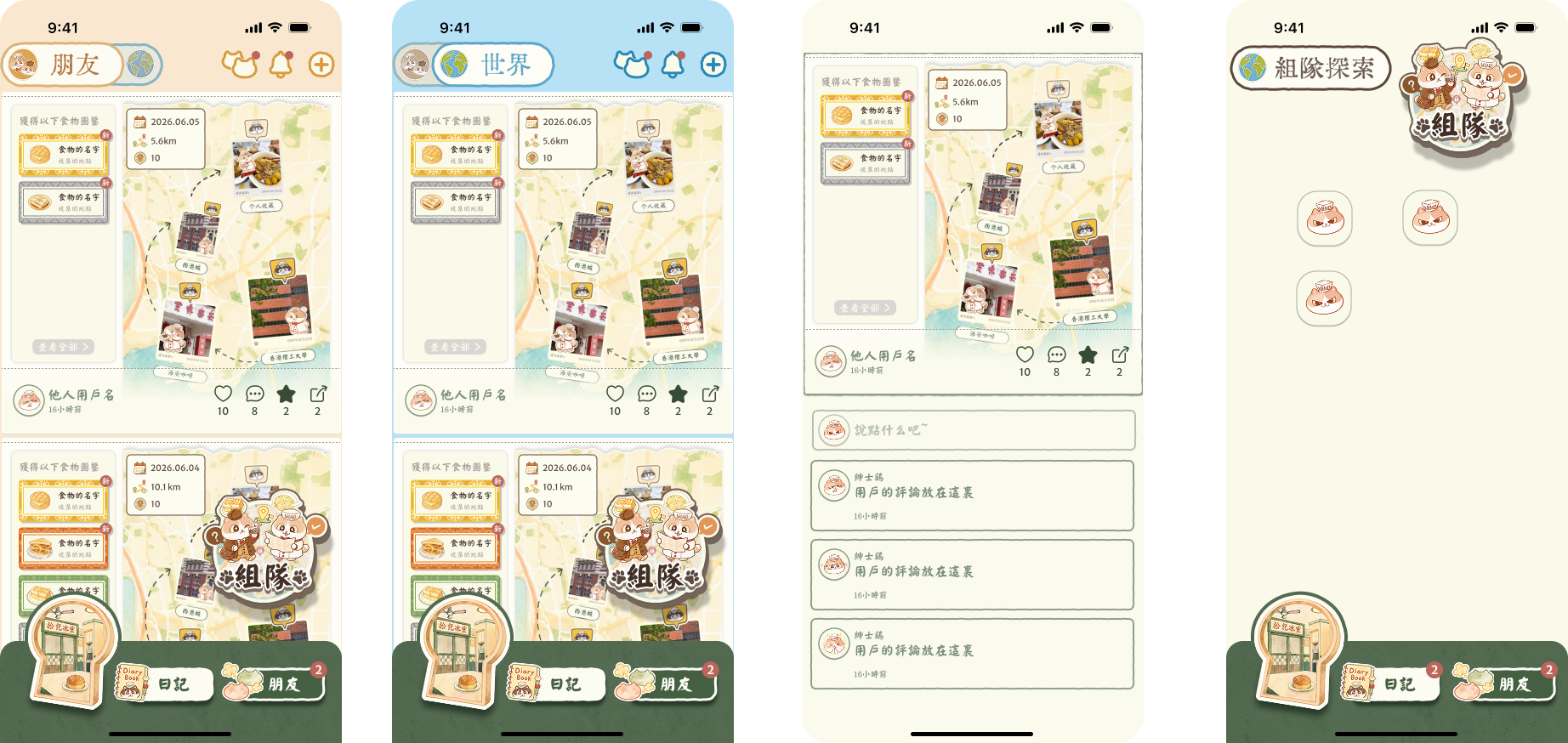
Social Function Area
Share your earned rewards and city walk journeys with friends, or post them globally.
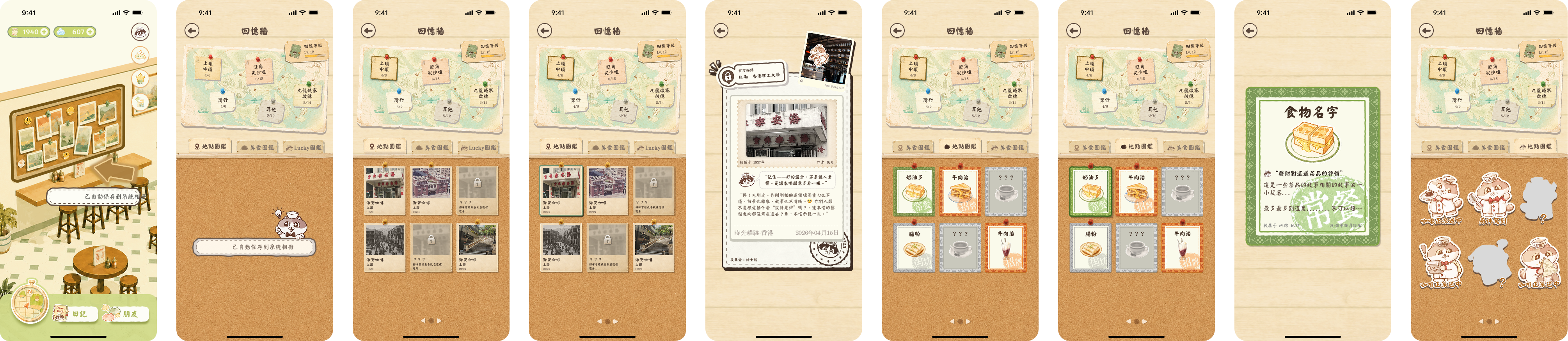
Bing Sutt
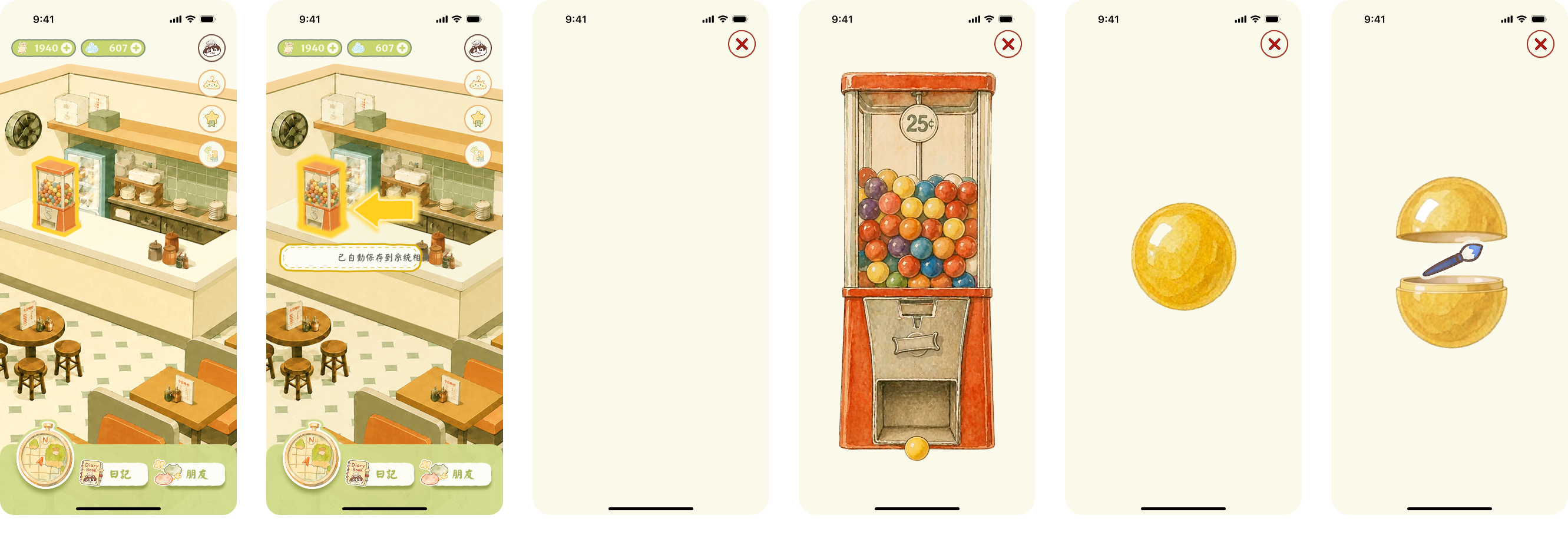
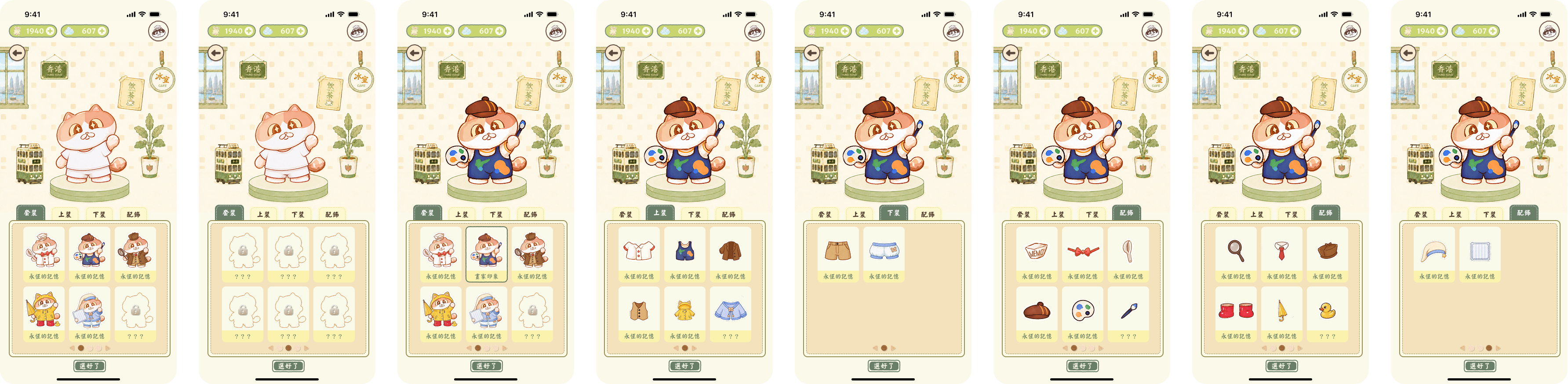
Check your Collection Board to see everything you've unlocked on your city walks: local history, food tips, and unique character figures. Collect virtual tokens to play the gashapon machine and win in-game rewards, including custom outfits for your character.
Walking Routes
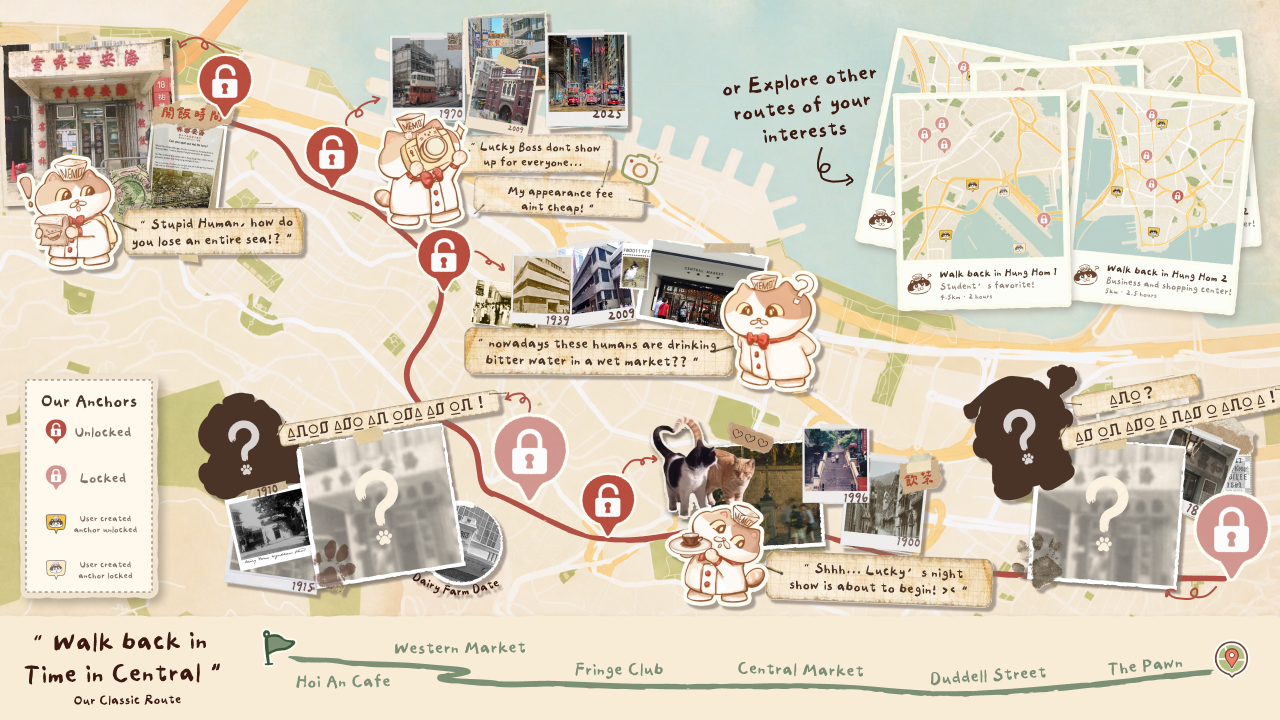
Our classic route — Walk back in Time in Central — plus other routes to explore based on your interests.
Beyond the App
CityPaws extends citywalk into a shareable IP experience: social media presence (RedNote/Instagram), sticker packs, AR postcards and gacha collectibles.
Design System
A warm, hand-drawn design language: Bestial Red, Acacia Green and Placebo Yellow as primary colours, 華康 calligraphy type ramp, and a full component library.
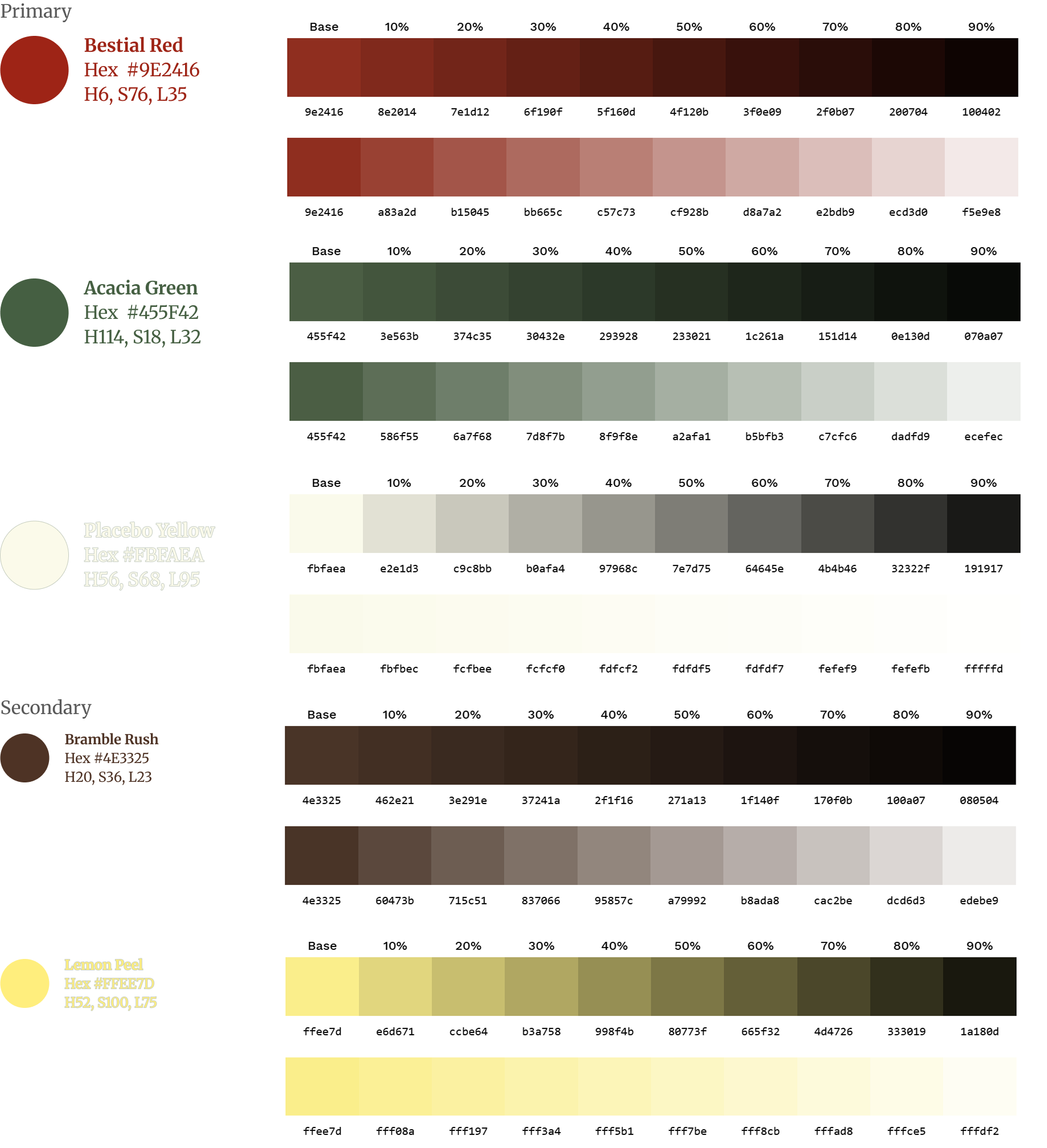
Colour palette — Bestial Red, Acacia Green, Placebo Yellow + secondary
Icon system
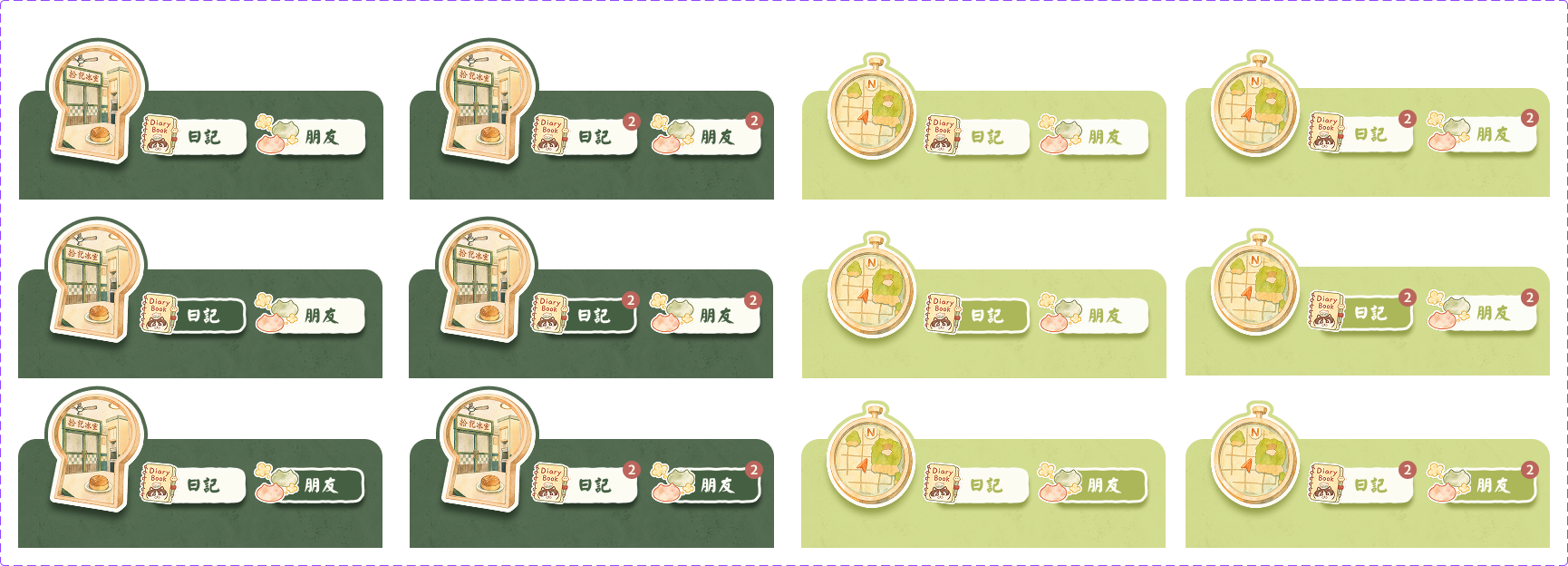
Navigation bars

Typography — 華康 calligraphy type ramp, 64px → 12px
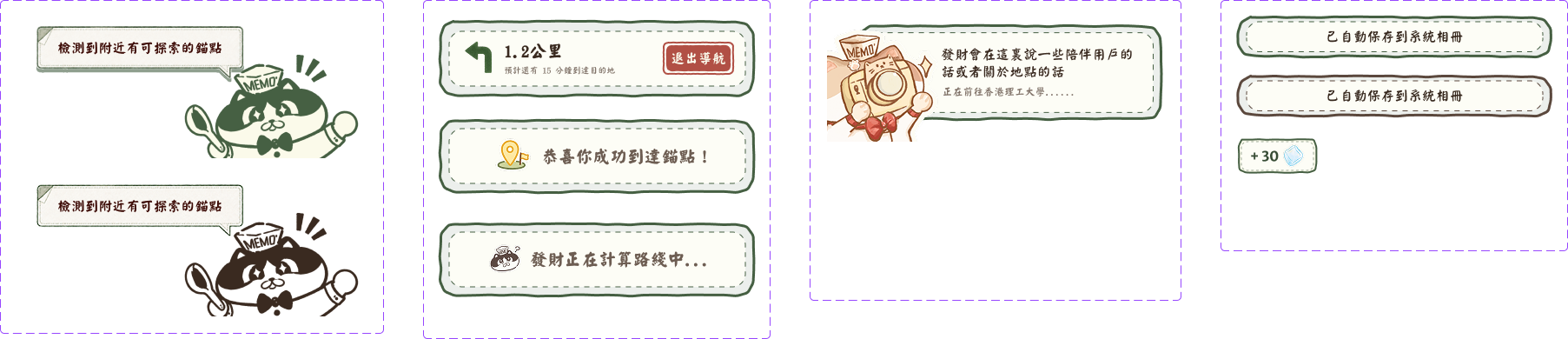
Dialogs, toasts & speech bubbles

Round icon buttons — 45px
What Makes CityPaws Different
Users walk normally, no fixed routes, real world first.
Emotional bond between user and IP.
Everyone has their own route and memory.
Contact